


Ensuring Wood Charcoal Quality Through Controlled Pyrolysis Processe
Wood charcoal quality hinges on a series of thermochemical transformations that occur during pyrolysis. The structural integrity, carbon density, volatile content, and calorific performance of the final product are all shaped by parameters embedded within the thermal decomposition pathway. Within a modern pyrolysis plant, precision control mechanisms make it possible to regulate these parameters and thereby guarantee consistent, high-grade charcoal output. Stable thermal environments, feedstock uniformity, and optimized residence times form the cornerstone of quality assurance.
Thermal Governance and Its Impact on Charcoal Properties
Temperature control is the most decisive factor in maintaining charcoal quality. Wood undergoes devolatilization within a critical temperature window where cellulose, hemicellulose, and lignin decompose at different rates. If the heating curve is too abrupt, microstructural fissures may develop, producing brittle and irregular charcoal. Conversely, insufficient temperatures leave excess volatiles trapped within the carbon matrix, lowering its fixed carbon ratio.
A precisely calibrated heating regime prevents these deviations. In a continuous or semi-continuous charcoal production machine, heat distribution systems sustain uniform thermal gradients across the reactor. This avoids localized overheating and ensures each wood particle experiences consistent thermal exposure. The result is a charcoal product with stable porosity, elevated carbon purity, and improved mechanical strength.
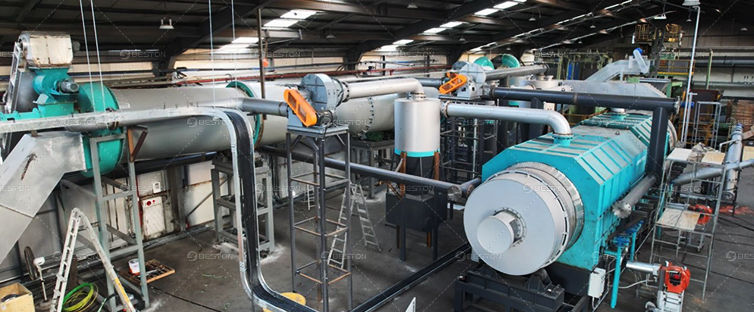
Residence Time as a Quality Safeguard
Charcoal quality is also determined by the length of time the biomass remains in the carbonization zone. Insufficient residence time produces under-carbonized material with low fixed-carbon content and higher reactivity. Extended residence time, on the other hand, facilitates the formation of a more graphitized carbon structure.
Continuous pyrolysis systems regulate residence time with precision through feed-rate adjustment, auger speed, or conveyor pacing. By stabilizing the time that each wood fragment spends within the active heating zone, the wood charcoal machine ensures uniform carbonization throughout the batch. This consistency supports predictable combustion behavior, reduced smoke production, and enhanced durability.
Feedstock Preparation and Structural Uniformity
Feedstock preparation plays a pivotal role in charcoal uniformity. Wood moisture content, species type, and particle size directly influence heating behavior. Excess moisture prolongs the drying phase and disrupts the onset of carbonization, while heterogeneous particle sizes create uneven devolatilization.
Pre-drying technology and size-screening mechanisms ensure that wood enters the reactor with predictable thermal properties. When feedstock is prepared to a uniform specification, pyrolysis reactions proceed smoothly. The resulting charcoal exhibits homogenous color, density, and combustion attributes. These qualities are essential when the product is intended for metallurgical reduction, activated carbon production, or high-temperature industrial applications.
Atmosphere Control and Chemical Stability
Maintaining an oxygen-free environment is indispensable to prevent combustion and preserve carbon yield. A controlled inert atmosphere—typically nitrogen or recycled pyrolysis gas—keeps oxidative reactions at bay. Even minor oxygen infiltration can degrade charcoal quality by triggering partial burning, which alters its carbon-to-ash ratio and compromises structural uniformity.
Modern reactor architectures employ airtight seals, pressure balancing, and continuous gas recirculation to eliminate these risks. Stable atmospheric conditions support slow, controlled cracking of organic polymers and encourage the formation of a dense aromatic carbon network. This network underpins the high calorific value and long burn duration characteristic of premium wood charcoal.
Post-Processing Measures and Quality Preservation
After leaving the reactor, charcoal must be cooled, screened, and stored under conditions that preserve its properties. Rapid quenching can induce thermal shock, compromising the structural lattice of the charcoal. A controlled cooling stage mitigates this risk and prevents spontaneous ignition caused by contact with ambient oxygen at high temperatures.
Screening removes fines and impurities, while proper storage safeguards the charcoal from moisture absorption. These measures complete the quality assurance cycle and protect the characteristics achieved during pyrolysis.
Ensuring Reliability Through Technological Integration
Automation, real-time monitoring, and advanced data analytics strengthen quality stability across industrial operations. Sensors measuring temperature, gas composition, and pressure provide immediate feedback for optimizing reactor conditions. When integrated into control algorithms, these systems allow operators to maintain a consistent production environment, bolstering both performance and profitability.
By coordinating these technological and operational elements, a pyrolysis plant secures stable, high-purity wood charcoal that meets demanding industrial and commercial standards.


Comments