


Investment Preparation Framework for Straw-Based Charcoal Production Projects
Straw-based carbonization projects have gained increasing attention as agricultural waste management and biomass energy utilization converge. Large volumes of crop residues such as rice straw, wheat straw, and corn stalks are often underutilized or openly burned, creating both environmental and regulatory challenges. Converting these residues into charcoal through controlled thermochemical conversion offers a pathway for resource recovery, soil amendment production, and carbon sequestration.
However, deploying a commercially viable system requires more than equipment procurement. Investment preparation must integrate feedstock logistics, process engineering, site infrastructure, regulatory compliance, and financial modeling. A straw charcoal machine represents only one component within a broader industrial ecosystem that must be carefully structured to ensure long-term operational viability.
Evaluating Feedstock Availability and Seasonal Variability
The foundation of any straw-based carbonization project is the stability of agricultural residue supply. Unlike industrial biomass streams, straw availability is highly seasonal and geographically dispersed.
Critical assessment factors include:
Harvest cycle timing
Regional crop yield consistency
Competing uses for straw (animal bedding, bioenergy, composting)
Collection efficiency and logistics
Moisture content variability
High moisture content in freshly harvested straw significantly affects carbonization efficiency. Pre-drying or natural field curing strategies may be required to stabilize feedstock conditions before processing.
A reliable supply chain model should incorporate multi-source procurement agreements to mitigate seasonal volatility.
Selecting the Appropriate Straw Charcoal Machine Configuration
Equipment selection is a core determinant of project scalability, energy efficiency, and product quality consistency.
Key technical parameters include:
Continuous or batch processing design
Thermal efficiency of carbonization chamber
Feedstock particle adaptability
Automation level and control precision
Emission handling capability
Heat recovery integration potential
A modern straw charcoal machine typically incorporates staged heating zones to optimize volatile release and carbon structure formation. Equipment with poor thermal control may result in incomplete carbonization or excessive ash formation, reducing product value.
Lifecycle performance, not initial capital cost alone, should guide procurement decisions.
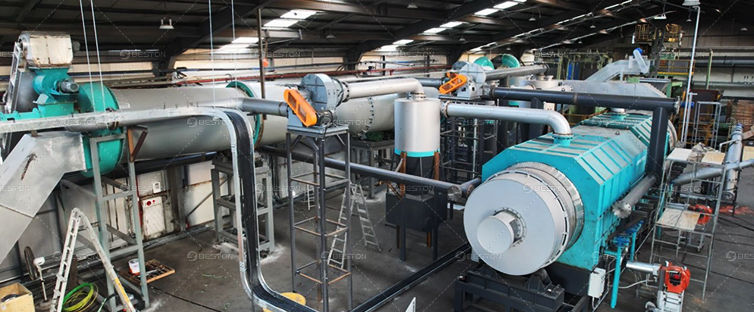
Site Planning and Infrastructure Development
Proper site selection directly influences operational efficiency and regulatory approval timelines. Straw carbonization facilities require sufficient space for feedstock storage, processing equipment, finished product handling, and environmental control systems.
Key infrastructure requirements include:
Land and Layout Design
Facility layout should support linear material flow from raw biomass intake to final product storage. This minimizes handling inefficiencies and reduces operational bottlenecks.
Utility Systems
Essential utilities typically include:
Stable electrical supply
Water access for cooling systems
Drainage infrastructure
Internal transport roads
Foundation and Structural Engineering
Thermal processing equipment requires reinforced foundations to withstand vibration, thermal expansion, and continuous mechanical loading.
Assessing Environmental and Regulatory Requirements
Agricultural residue utilization projects are increasingly subject to environmental oversight due to emissions, dust generation, and waste handling considerations.
Key compliance domains include:
Air emission control permits
Solid residue management regulations
Occupational safety standards
Fire prevention requirements
Local land-use approvals
Regulatory complexity varies significantly by jurisdiction. Early engagement with environmental authorities reduces permitting delays and minimizes design revision risks during project development.
Energy Balance and Process Integration Planning
Straw carbonization is an energy-intensive process, particularly during initial heating stages where moisture evaporation and volatile release occur.
Energy planning considerations include:
Fuel source for startup heating
Internal energy recovery from pyrolysis gases
Heat exchange optimization
Insulation efficiency of carbonization chambers
Efficient systems often integrate recovered combustible gases to offset external energy demand, improving overall process economics.
Energy imbalance during early planning stages can significantly affect long-term operational profitability.
Financial Modeling and Investment Structuring
Accurate financial preparation is essential for evaluating project feasibility and risk exposure. Straw-based carbonization projects typically involve multiple cost layers beyond equipment procurement.
Key financial components include:
Capital expenditure for equipment and infrastructure
Land acquisition or leasing costs
Installation and commissioning expenses
Operating labor costs
Maintenance and spare parts allocation
Feedstock collection and logistics costs
Revenue streams may include charcoal sales, soil amendment markets, and potential carbon credit generation depending on certification frameworks.
A robust financial model should incorporate sensitivity analysis for feedstock cost fluctuations and product price volatility.
Logistics and Supply Chain Engineering
Efficient logistics are critical due to the low bulk density and high volume of straw feedstock.
Key logistical considerations include:
Compression or baling of straw for transport efficiency
Seasonal storage capacity planning
Transportation distance optimization
Material handling system design at plant site
Poor logistics planning can result in high transportation costs that significantly erode project profitability.
Operational Staffing and Technical Capability
Even highly automated systems require skilled personnel for stable operation and maintenance.
Core competency requirements include:
Process operation control
Thermal system monitoring
Mechanical maintenance capability
Safety procedure compliance
Emergency response readiness
Training programs should be implemented before commissioning to ensure operators understand both equipment behavior and process dynamics.
Building a Stable Investment Foundation
Investment preparation for straw carbonization projects requires an integrated approach that combines engineering design, feedstock logistics, regulatory alignment, and financial planning. A straw charcoal machine functions as the core conversion asset, but its performance is deeply influenced by upstream and downstream system design.
Projects that prioritize feedstock stability, process efficiency, and infrastructure readiness are better positioned to achieve consistent operational output and long-term economic sustainability. By addressing these foundational elements during the investment phase, developers can significantly reduce technical uncertainty and improve the likelihood of sustained project performance.


Comments