


Optimizing Ash Content in Rice Husk Pyrolysis
In rice husk pyrolysis, ash content directly influences the quality and yield of biochar and pyrolysis oil. Excessive ash reduces calorific value, accelerates equipment abrasion, and impairs thermal conductivity within a pyrolysis plant. Effective ash control is therefore critical for maximizing operational efficiency and maintaining product consistency.
Rice husk, inherently high in silica and inorganic compounds, presents unique challenges. The silica-rich ash tends to accumulate in reactors, potentially obstructing heat transfer surfaces and affecting residence time. Consequently, understanding ash formation dynamics and implementing precise control strategies is essential for reliable pyrolysis operations.
Ash Formation Dynamics
Ash content in rice husk is largely determined by its inherent mineral composition, process temperature, and residence time. During pyrolysis, organic constituents volatilize, leaving behind inorganic residues that form ash. Temperature profiles above 500°C accelerate mineral oxidation, increasing ash rigidity and hardness.
In addition to temperature, feedstock moisture and particle size influence ash behavior. Fine particles tend to form dust that can be carried over with gas streams, whereas coarse particles settle within the reactor, altering flow dynamics. The rice husk charcoal making machine design must account for these phenomena to prevent operational disruptions.
Pre-Treatment Techniques
Controlling ash begins before material enters the pyrolysis plant. Pre-treatment strategies include washing, screening, and particle sizing. Washing rice husks with water or mild chemical solutions can reduce surface ash content and remove soluble salts.
Screening ensures uniform particle size, enhancing flow consistency and heat distribution in the reactor. This uniformity minimizes localized hotspots that accelerate ash fusion and slag formation. Optimal pre-treatment can lower operational wear and extend maintenance intervals.
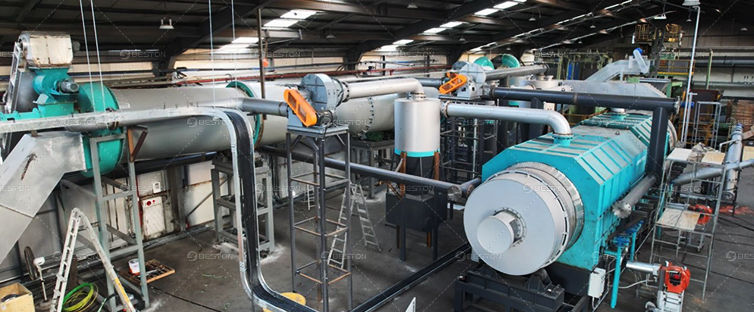
Reactor Temperature Optimization
Maintaining precise thermal conditions within the pyrolysis plant is pivotal for ash control. Lower pyrolysis temperatures (typically 400–500°C) minimize ash sintering and reduce char brittleness, preserving structural integrity.
Temperature uniformity across the reactor also prevents localized accumulation of fused ash, which can obstruct material flow and heat transfer. Advanced temperature monitoring systems enable real-time adjustments, ensuring consistent thermal profiles and optimized product quality.
Gas Flow and Residence Time
Proper management of gas flow and residence time within the charcoal making machine directly impacts ash distribution. Adequate residence time allows complete devolatilization of organic matter, reducing char contamination with partially carbonized residues.
Conversely, excessively long residence times can increase ash agglomeration and reduce overall throughput. Balancing flow rates and residence time requires careful process calibration, particularly for continuous pyrolysis operations where throughput consistency is critical.
Post-Pyrolysis Handling
Effective ash management extends to post-pyrolysis processes. Char removal systems, such as rotary discharge mechanisms and ash conveyors, must handle high-silica residues without excessive wear. Regular inspection and maintenance of these components prevent operational downtime and preserve reactor efficiency.
Additionally, ash separation techniques, including sieving or cyclonic separation, can recover fine char particles while isolating unwanted mineral residues. This approach not only enhances biochar purity but also allows potential valorization of separated ash in industrial applications, such as cement or refractory material production.
Monitoring and Process Analytics
Continuous monitoring within the pyrolysis plant is essential for proactive ash control. Sensors tracking temperature, gas composition, and char characteristics enable operators to detect deviations in real time. Advanced analytics can predict ash accumulation patterns, informing preemptive maintenance schedules and process adjustments.
Data-driven feedback loops allow operators to optimize feedstock preparation, reactor conditions, and post-processing simultaneously. This integrated approach ensures both high product quality and minimal operational disruption.
Economic and Environmental Implications
Effective ash management has direct economic benefits. Reduced abrasion and maintenance frequency lower operational expenditures, while higher-quality biochar and pyrolysis oil command better market prices.
From an environmental perspective, controlling ash minimizes particulate emissions and facilitates cleaner downstream processing. Proper disposal or utilization of high-silica residues aligns with circular economy principles, enhancing the sustainability profile of rice husk pyrolysis projects.
Best Practices Summary
Pre-Treatment: Wash and screen rice husks to reduce surface ash and ensure uniform particle size.
Temperature Control: Maintain optimal thermal profiles to prevent ash sintering and char brittleness.
Gas Flow Management: Balance residence time and flow rates for efficient devolatilization without ash agglomeration.
Post-Pyrolysis Handling: Utilize robust char removal and ash separation systems to protect equipment and improve product quality.
Monitoring: Implement real-time sensors and analytics to anticipate ash accumulation and adjust processes dynamically.
Through a combination of feedstock management, reactor optimization, and post-processing protocols, pyrolysis plants can maintain controlled ash content in rice husk pyrolysis. This approach ensures operational stability, superior biochar quality, and sustainable utilization of residues.


Comments